

Panama Immigration Renewal Before Your Status Expires
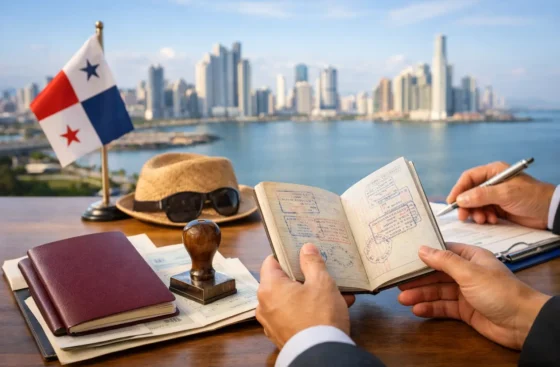
A residence card approaching its expiration date can affect more than your right to remain in Panama. It may interrupt travel plans, delay a banking process, complicate a real estate closing, or create uncertainty for a spouse or dependent. A Panama immigration renewal should therefore be treated as a planned legal process, not an administrative task left for the final week.
For foreign residents, retirees, investors, professionals, and business owners, the right strategy starts with one question: what immigration status do you currently hold, and what exactly is due for renewal? Panama has several residence categories, each governed by its own requirements, validity periods, and supporting evidence. A solution that works for one visa holder may not apply to another.
Why Panama Immigration Renewal Requires Early Planning
The expiration date on a card or immigration resolution is only one part of the picture. Your renewal may depend on maintaining the conditions that supported the original application. For example, a retired resident may need to demonstrate continued eligibility under the applicable pension-based category. An investor may need to preserve the qualifying investment. A foreign employee may need current employment and labor documentation. Dependents may need to show that their relationship to the principal applicant remains valid.
This is why early review matters. It gives you time to identify missing documents, obtain certificates from abroad, update records, and resolve inconsistencies before they become an obstacle. Documents issued outside Panama may require apostille or consular legalization, and some certificates have limited validity. Waiting until the last minute can create unnecessary pressure and restrict your options.
A timely review also helps distinguish between a renewal, an extension, a change of immigration category, and an application for a permanent status or updated identification document. These are not interchangeable procedures. The correct path depends on your immigration history, your current purpose in Panama, and the legal rules in effect when you apply.
Start With Your Current Immigration Record
Before collecting paperwork, review the documents that define your present status: the immigration resolution, residence card, passport, prior filing receipts, and any identification issued in Panama. Confirm the expiration dates and make sure the information across those records is consistent.
Small discrepancies can matter. A passport renewal, a change in marital status, a new address, a different employer, or a change in the ownership structure of an investment can affect the evidence required for your file. If your name appears differently across documents, that issue should be addressed with appropriate supporting records rather than ignored.
For families, it is also essential to review each person separately. A principal applicant's immigration status does not automatically answer every question about a spouse, child, or other dependent. Each family member may have a different card expiration date, passport status, or documentation requirement. Coordinating the family file early can prevent one person's incomplete paperwork from delaying the broader process.
Do Not Assume Your Original Documents Are Enough
A common mistake is assuming that the documents submitted for the initial residence application can simply be reused. Immigration authorities may request updated proof of financial capacity, local address, family relationship, criminal history, or compliance with the basis of residence. The exact requirements depend on the category and the current administrative criteria.
For that reason, your legal team should review your status against current rules rather than rely solely on a checklist from several years ago. Immigration processes can change through regulations, administrative practice, or new documentary standards. Clear advice at the beginning protects time, travel plans, and legal certainty later.
Documents That Often Need Attention
While every case should be assessed individually, renewal files commonly require an in-date passport, copies of prior immigration documents, photographs, government forms, and proof that the underlying residence category remains valid. Depending on the case, applicants may also need civil registry certificates, pension documentation, bank records, employment documents, corporate records, property records, or investment evidence.
Foreign-issued documents deserve special attention. A birth certificate, marriage certificate, police record, pension letter, or corporate certificate may need apostille or legalization before it can be accepted in Panama. Translation requirements can also apply. The question is not merely whether you possess the document, but whether it is current, properly authenticated, and suitable for the specific procedure.
Investors and business owners should be particularly careful when their immigration status is connected to a company, real estate, a fixed-term deposit, or another qualifying asset. Changes in ownership, financing, corporate directorship, or the value and structure of an investment can have immigration consequences. A coordinated review of immigration, corporate, banking, and real estate records is often the most efficient approach.
Travel During the Renewal Process
International travel is one of the most sensitive issues in a Panama immigration renewal. A pending application does not automatically mean that you can leave and re-enter Panama under every circumstance. Your ability to travel may depend on the validity of your existing card, passport, visa, filing status, and any travel authorization required by the immigration authority.
Do not book nonrefundable travel based on assumptions. Review your travel dates before filing and ask for advice tailored to your specific immigration category. This is especially relevant for clients who divide their time between Panama and the United States, manage businesses abroad, or need to travel for family or medical reasons.
If travel is unavoidable, the timing of the filing can make a meaningful difference. In some situations, it may be prudent to organize documents and submit before a planned trip. In others, travel arrangements may affect when it is practical to file. The right decision depends on the record, not on a generic rule.
When Renewal May Not Be the Best Option
Renewal is not always the strongest legal strategy. A person whose circumstances have changed may be better served by moving to a different residence category, pursuing permanent residence where available, or reorganizing the legal basis of an investment or family application.
Consider a foreign national who initially obtained residence through employment but later establishes a Panama-based business. Or a retiree who wishes to purchase property and structure assets through a corporation. Or an investor whose original qualifying asset has been sold. These changes may create an opportunity to align immigration status with a more durable personal or commercial plan.
The trade-off is that a new application or category change may require additional documents, costs, and review. It should not be chosen simply because it appears more convenient. However, it can offer stronger long-term alignment when your life, family, or business in Panama has evolved beyond the original application.
Common Errors That Create Avoidable Delays
Most renewal problems are preventable. They typically arise from late preparation, expired foreign documents, incomplete evidence of eligibility, inconsistent information, or a failure to consider dependent family members and travel plans.
Another frequent issue is treating immigration as separate from the rest of a client's legal affairs. A residence renewal may overlap with a passport update, marriage registration, local employment change, property acquisition, bank compliance request, or corporate restructuring. Addressing these matters in isolation can lead to duplicated effort or documents that do not support one another.
Professional representation helps bring these pieces together. Kovalenko & Vera provides coordinated legal support for clients whose immigration objectives intersect with investment, corporate, real estate, family, and compliance matters in Panama. The goal is not simply to submit a file, but to protect the legal foundation behind your residence and plans in the country.
A Practical Timeline for Your Renewal
Begin the review several months before the relevant expiration date whenever possible. This allows enough time to identify documents that must be requested from overseas, apostilled, translated, or corrected. It also creates room to evaluate whether renewal remains the appropriate route.
Once the legal basis and document list are confirmed, organize the file carefully and verify that every record reflects your current circumstances. After filing, keep copies of submissions and receipts, monitor communications from the authorities, and avoid making material changes to the facts supporting your application without legal advice.
If an authority requests additional information, respond accurately and within the required timeframe. A request is not necessarily a sign that the case will be denied, but it does require a focused response. Providing unnecessary or contradictory documents can be as harmful as failing to provide required evidence.
Your immigration status is part of the legal structure that supports your home, family, investments, and freedom to travel. Giving your renewal the attention it deserves now can preserve the stability you worked to establish in Panama.