
Panama Visa Options for Residency and Investment
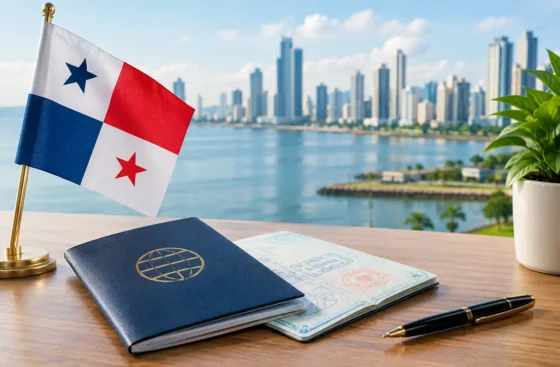
A move to Panama often begins with a simple question: which residency route fits the life you intend to build? The answer is rarely based on immigration alone. Your income source, family structure, planned real estate purchase, company ownership, banking needs, and ability to work in Panama can all affect which Panama visa options are practical and sustainable.
For retirees, the Pensionado program may offer a direct path. For investors, a qualified investor route may align more closely with a property or business strategy. For a professional relocating through an employer, a work-based immigration process may be necessary. Choosing the wrong category can create avoidable delays, duplicated expenses, or restrictions that conflict with your real objective.
Panama visa options should match your real purpose
A visa or residence permit is not simply a document to obtain before opening a bank account or signing a lease. It is part of a broader legal structure. A client planning to purchase a condominium, for example, may need to decide whether to buy personally, through a corporation, or through another ownership structure. That decision can affect estate planning, financing, compliance obligations, and the evidence used in an immigration application.
The right route depends on what you can document, not only what you prefer. Panama immigration authorities review the legal basis for residence, supporting financial records, foreign documents, local filings, and, where applicable, the source and destination of invested funds. Requirements, qualifying countries, thresholds, and administrative criteria can change, so a case should be reviewed under the rules in force when the application is prepared.
Pensionado Visa for retirees with qualifying income
The Pensionado Visa is one of Panama’s best-known residence programs. It is designed for applicants with a lifetime pension or similar qualifying income that meets the applicable minimum amount. The income generally must be supported by official evidence from the paying institution and properly legalized or authenticated for use in Panama.
This category is attractive because it is built around recurring income rather than a high-value investment. It may suit retired Americans, former government employees, military retirees, and individuals receiving qualifying private pensions. Dependents can often be included, although additional financial support requirements may apply.
The trade-off is that Pensionado status is not a substitute for unrestricted employment authorization. A retiree who expects to actively work for a Panamanian employer, manage day-to-day local operations, or provide services in circumstances requiring a work permit should evaluate that issue before applying. Receiving investment income or owning assets is different from engaging in work that requires local authorization.
Qualified Investor residence for capital deployment
The Qualified Investor program can be appropriate for individuals whose residence plan is tied to a substantial investment in Panama. Depending on the applicable category and current regulations, qualifying investments may involve real estate, a securities account, a fixed-term bank deposit, or investment through a local business structure.
This option can make sense when the investment is commercially sound on its own. A buyer who already intends to acquire a property for personal use, rental income, or long-term asset diversification may be able to coordinate that transaction with the residency process. The same is true for investors establishing a local operation or allocating capital through an eligible financial structure.
However, immigration should not be the only reason to make a large investment. Property title, purchase contracts, due diligence, mortgage terms, tax treatment, corporate governance, and source-of-funds documentation require independent attention. An investment that qualifies for residence but is poorly structured can still create legal or financial exposure.
Friendly Nations and economic solvency routes
Panama’s Friendly Nations framework has historically been relevant to nationals of designated countries who establish a qualifying economic connection to Panama. The available route may be connected to employment with a Panamanian company, real estate investment, or a qualifying bank deposit, subject to the rules and conditions in effect at the time of filing.
This option is often misunderstood as an automatic residence benefit based solely on nationality. It is not. Eligibility can depend on the applicant’s nationality, the selected economic basis, documentary evidence, and whether the applicant meets the requirements for temporary or permanent residence. A local company created only for immigration purposes, without proper operations, compliance, or a defensible legal basis, can create problems rather than solve them.
Economic solvency categories may also be relevant for applicants who can demonstrate the required capital through a Panamanian bank deposit, real estate, or a permitted combination of assets. These cases require careful coordination because bank onboarding, real estate closing, corporate documents, and immigration filings may move on different timelines.
Employment-based residence and work authorization
Foreign professionals who are relocating because of a job offer need to assess two related but distinct issues: immigration status and authorization to work. A residency application does not automatically grant the right to work in every case, and a work permit process may involve additional requirements before the Ministry of Labor.
Employer-sponsored applications can be practical for executives, technical personnel, and employees of established Panamanian companies. Yet they involve corporate compliance, payroll considerations, job classifications, and restrictions related to the proportion of foreign workers permitted in certain workplaces. Businesses should plan before a candidate arrives, rather than attempting to correct the structure after operations begin.
For entrepreneurs, the analysis is more nuanced. Owning shares in a Panamanian company does not always mean the owner has unrestricted authority to perform work for that company. The intended role, sector, income source, and corporate structure should be reviewed together.
Family-based residence and marriage cases
Family ties can provide another route to legal residence. Marriage to a Panamanian citizen, parentage, and certain dependent relationships may support an application, but these cases require more than a civil certificate. Authorities may examine whether the relationship is genuine and whether the family unit has credible supporting evidence.
Applicants should expect to provide documents such as marriage or birth certificates, identity records, proof of address, and evidence relevant to the particular family relationship. Foreign documents commonly require apostille or consular legalization, as well as official translation when needed. Timing matters because many records must be recent when submitted.
Family-based residency is personal by nature, but it can still involve broader planning. A couple purchasing a home, creating a family business, or arranging inheritance protections should consider how residence status, title ownership, and estate planning work together.
Short-term entry is not a long-term residence plan
Visitors from many countries may enter Panama for a limited period under tourist or visitor rules. That permission can be useful for scouting neighborhoods, meeting real estate professionals, attending business meetings, or evaluating a potential move. It is not a reliable replacement for residence status if Panama becomes your principal home or operational base.
Repeated entries, extended stays, and informal work arrangements can create immigration risk. The better approach is to use an exploratory visit for due diligence, then select the residence process that supports the intended lifestyle and legal activities.
What to evaluate before selecting a route
Before filing, clarify four practical questions: Will you live in Panama full-time or part-time? Will your income come from a pension, investments, a foreign business, or Panamanian employment? Will you acquire property or establish a company? Will a spouse, children, or other dependents apply with you?
Your answers determine what documents should be collected abroad and what legal work should begin in Panama. Passport records, police certificates, civil registry documents, pension certifications, bank statements, corporate records, investment documents, and proof of funds may all be required. Obtaining them in the correct form before travel can reduce pressure later.
A coordinated legal strategy is especially valuable when residence is only one part of the plan. Kovalenko & Vera can align immigration representation with corporate formation, property acquisition, financing, family documentation, and compliance needs so each step supports the next.
The strongest residence application is not necessarily the fastest-looking option. It is the one that accurately reflects your finances, your family, and the future you intend to create in Panama.